What Happens When Fashion Learns from Nature?
Credit: Ako Cui
24 April 2026
There is a question I return to often in my work: what if the fashion industry had been designed to participate in natural cycles from the very beginning? To operate the way a forest does, where every output becomes an input, where nothing accumulates as waste, and where the system grows more resilient over time?
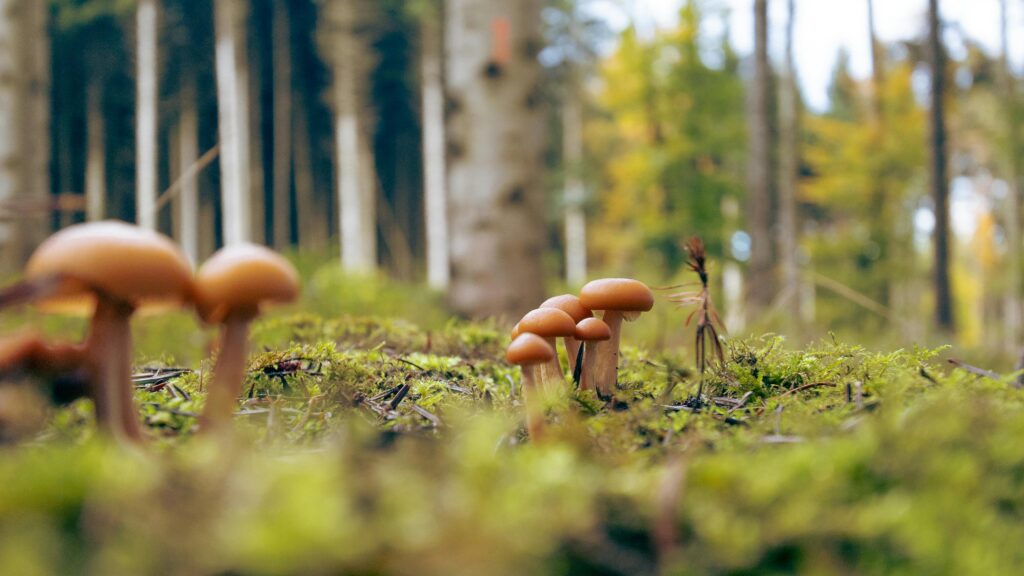
Every forest, every river basin, every healthy soil ecosystem answers that question daily. Natural systems run on sunlight, build with benign chemistry, and have been refining these strategies for 3.8 billion years. They have never produced a landfill.
Biomimicry is the practice of learning from these organisms and systems. It means studying nature as a mentor and applying its principles to human design. When the fashion industry begins to take that seriously, the answers are more specific and more grounded than most sustainability conversations allow.
Cedit: Adres Ebner-Pexels
A SYSTEM DESIGNED WITHOUT ECOLOGICAL LOGIC
To understand what nature-inspired design offers fashion, it helps to be honest about where the industry currently stands.
Synthetic materials and chemical finishes are engineered for performance and durability, but designed without consideration for safe return to the earth. An estimated 8,000 chemicals move through the global textile supply chain, many of them persisting in ecosystems long after a garment is discarded. The industry generates around 92 million tonnes of textile waste annually from unsold products, and the volume grows as production accelerates. The consequences fall hardest on communities in the Global South: in Accra, Ghana, the traders and workers of Kantamanto Market absorb millions of garments each week that arrive too degraded or too cheap to recirculate, accumulating instead in waterways and informal settlements around Korle Lagoon.

Credit: OR Foundation
These are the outcomes of a system that treats the earth as a raw material source on one end and a disposal site on the other, with no designed relationship to the cycles that keep either end functioning. The fashion industry has exceeded planetary boundaries because it was never designed to respect them. Ecological systems offer a different operating model. And the innovators building toward it are producing results.

3.8 BILLION YEARS OF R&D
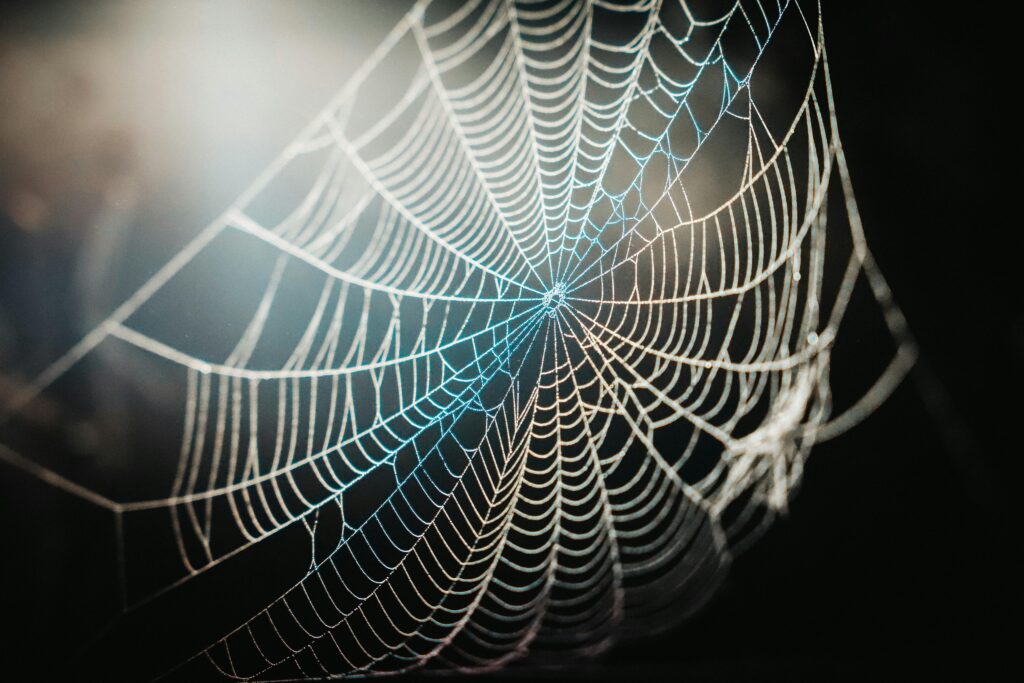
When a spider spins silk, it does so at ambient temperature, using water, producing a fiber stronger than steel by weight that fully biodegrades at end of use. To attract pollinators, plants use vivid colours in flowers, this uses chemistry that does not persist or accumulate in organisms. When a leaf falls and decomposes, it becomes the nutrient base for the next generation of growth.
These are engineering solutions, refined over evolutionary time. Biomimicry asks us to consider them as design guidance: to shift the question from “how do we reduce harm?” toward “how do we design systems that operate the way ecological ones do?”
That shift produces a genuinely different category of innovation.
Credit: Chase McBride- Pexels
WHAT THE INNOVATORS ARE BUILDING
Across Fashion for Good’s global accelerator network and The Biomimicry Institute’s Ray of Hope Accelerator, a body of work is emerging at this intersection. These innovators are reimagining the underlying logic of how fashion materials are made, colored, used, and returned.
Spintex Engineering, a Ray of Hope alumnus from the University of Oxford, decoded the mechanics of spider silk and developed a process to spin biodegradable textile fibres from a liquid gel at room temperature using only water. The resulting fibres are strong, biodegradable, and represent a viable alternative to oil-derived synthetics. FIBERLY, from the 2024 Ray of Hope cohort, applies the logic of natural nutrient cycles to post-consumer textile waste, converting cellulosic fibres back into high-quality material comparable to virgin cotton. What the linear economy discards becomes feedstock.
On the Fashion for Good side, traceless looked at how biological systems build protective materials from agricultural residues and created a fully home-compostable alternative to conventional plastic films and coatings. Algaeing uses the power of algae to create bio-based dyes and inks that can be used in traditional production machinery. By utilising a closed-loop system, they can replace synthetic colours, and use no toxic chemicals and fertilisers to create colour that is safer for the skin. Samsara Eco uses enzymatic processes, the same biological tools that ecosystems use to break down complex matter, to return PET and nylon waste to their original molecular building blocks for reuse.
Each company operates at a different point in the supply chain, but they share an orientation: asking what nature would do, and building toward that answer.
THE MISSING PIECE: DESIGNING FOR RETURN
There is one dimension of nature-inspired innovation in fashion that tends to go unseen, and it is the one The Biomimicry Institute’s Nature of Fashion: Design for Transformation initiative has made central to its work.
Decomposition.
In every functioning ecosystem, decomposition is the engine that closes the loop. When organisms and materials break down, they return nutrients, energy, and structure to the system. The cycle completes. The current circular economy conversation in fashion focuses, understandably, on the top of the loop: reuse, repair, resale, recycling. These are necessary. But they leave unanswered what happens to the garments that are too blended, too contaminated, or too degraded for any of those pathways. A significant fraction of the global textile waste stream has no real destination in most circular frameworks.
The Nature of Fashion initiative, funded by the Laudes Foundation and operating across pilots in Ghana, the Netherlands, and Germany, treats decomposition as a designed outcome rather than a failure.

In Accra, the Or Foundation discovered that microbial communities in Korle Lagoon are already evolving to metabolise synthetic polymers. The pollution hotspot has become an evolution hotspot: a site where nature is actively developing solutions under pressure. The pilot’s approach is to learn from and partner with that ecological intelligence rather than impose external technologies over it. In the Netherlands, Circle Economy and partners are developing biological and thermochemical pathways to convert mixed textile waste into feedstock for other industries. In Germany, the Beneficial Design Institute is building integrated processes that transform textile waste into biocompatible outputs with applications in agriculture, packaging, and medicine.
The insight connecting all three is that decomposition is a systems outcome, not only a material property. Switching to organic fibres alone does not close the loop. The whole system, from chemistry to collection to what we define as value, has to be redesigned. Nature does not have a waste problem because it never separated production from return. Designing fashion with return as a criterion from the beginning changes what the entire system looks like.
THE SHIFT THAT MATTERS MOST
The pilots in the Nature of Fashion initiative are honest about limits. Bioreactors fed with real textile waste from Kantamanto Market could not replicate what was achieved with pure polymers in laboratory conditions. Real waste is dyed, coated, blended, treated with thousands of chemical additives. That gap is ecological wisdom speaking: clothing is produced to perform, not to safely re-enter biological cycles. End-of-life innovation can only go so far when the production model generates materials too complex for any natural process to handle.
This is why the most important contribution of nature-inspired thinking in fashion may be the shift in question it demands. Taking nature seriously as a design teacher means asking what kind of system ecological intelligence actually supports: one built on less production, better materials, genuine biological return, and textiles designed as nutrients rather than waste. The innovations exist. The evidence from pilots on three continents is accumulating. The question is whether the industry is ready to use that evidence to ask harder questions about what fashion is permitted to leave behind.
At The Biomimicry Institute, we believe the future of fashion is one that ecological systems already know how to sustain. Fashion for Good and the Biomimicry Institute share a commitment to the innovators and ideas that can move the industry toward that future. We are at an exciting moment, and the invitation from the natural world has been open for a very long time.
Asha Singhal is the Director of the Nature of Fashion: Design for Transformation program at The Biomimicry Institute, an initiative funded by the Laudes Foundation exploring decomposition-guided approaches to textile waste transformation across pilots in Ghana, the Netherlands, and Germany. Learn more at biomimicry.org .
Other Articles

Wendy Woods Named Chair of the Fashion for Good BV Board

Moving Beyond PFAS: Fashion for Good Launches a New Project to Navigate the Emerging Landscape of PFAS-free Finishes