
India Blueprint
India’s textile and apparel industry is at a critical inflection point. Contributing 2% to GDP and employing 45 million people, the sector faces mounting pressure from water scarcity, climate risks, and stringent global sustainability requirements. To meet the government’s US$100 billion export target by FY2031, the industry must achieve an ambitious 18% CAGR—demanding a rapid shift from resource-intensive processing to net-zero manufacturing. The Future Forward Factories India blueprint, initially developed in collaboration with Arvind limited, and later expanded into an open-source blueprint addresses this challenge through scalable strategic recommendations, with refined impact and cost modelling suitable for replication across India’s textile manufacturing ecosystem.
Module 1
Pathway 1: Greenfield Integrated ‐ Knits and Wovens Dyeing
Technology Details

Environment Impact + Project Financials

Pathway 2: Facility Retrofitting - Woven Continuous Line
Technology Details

Environment Impact + Project Financials

Pathway 3: Facility Retrofitting - Woven Exhaust Line
Technology Details

Environment Impact + Project Financials

Pathway 4: Facility Retrofitting ‐ Knit Semi‐Continuous Line
Technology Details

Environment Impact + Project Financials

Pathway 5: Facility Retrofitting ‐ Knit Exhaust Line
Technology Details

Environment Impact + Project Financials

Module 2
While the Future Forward Factory integrates process innovations and changes, it is important to integrate renewable sources of energy and efficiency measures to phase out the consumption of fossil fuels and provide end to end sustainability and operational savings.
The piechart shows the breakdown of the typical thermal energy use in a composite textile plant with spinning, weaving/knitting, and wet processing. Fabric preparation (de-sizing, bleaching, etc.); dyeing and printing; and finishing together consume the greatest share of thermal energy (50%). A significant amount of thermal energy is lost during steam generation and distribution (35%). It is clear from the above figure that lower carbon energy sources and high‐efficiency technologies to electrify heating have a large potential for reducing fossil fuel use and GHG emissions in the textile industry.
Overview of key Utilities for Fossil Fuel Phase out
1. Biomass Boiler and Steam System
Biomass boilers utilise renewable organic materials such as agricultural residues, wood chips, or pellets to generate steam, replacing fossil fuels such as coal or natural gas or oil. In the context of the Future Forward Factory, biomass is generally assumed to be sustainably sourced and treated as carbon neutral. Nominal emissions from transport and processing are ignored for simplicity. Therefore, compared to fossil fuel–based boilers, biomass boilers are considered to have zero net emissions. However, if Forest, Land and Agriculture (FLAG) emissions reporting becomes mandatory in the future, emissions associated with biomass must be reported under FLAG.
Additionally, the biomass boiler can be complemented with advanced features such as closed-loop operation, programmable logic controller (PLC) based controls, and economisers enhance thermal efficiency by recovering waste heat from flue gases. Insulated steam distribution systems and steam traps minimise heat losses, ensuring optimal energy utilisation. By integrating oxygen analysers and blowdown control systems, plants can maintain combustion efficiency and reduce water wastage. This technology not only lowers carbon footprint but also stabilises fuel costs by leveraging locally available biomass resources.
With a strategy that focuses on what is immediately available, feasible and environmentally sustainable, the current Future Forward Factory Pathways are developed by integrating a 100% biomass powered boiler. Subsequent blueprints will follow the same strategy and evaluate electrification backed by renewable sources as the priority option before considering other utilities.
2. Compressed Air System
Compressed air is a critical utility in textile operations, powering pneumatic controls, spinning machines, and other equipment. Traditional systems are often inefficient, leading to high energy costs. Modern Internal Permanent Magnet (IPM) based air compressors equipped with IE5 equivalent motors and screw technology deliver superior efficiency and reliability. Integration with Waste Heat Recovery (WHR) systems allows the heat generated during compression to be repurposed generating hot water, reducing overall energy demand. Optimised piping layouts using seamless aluminium minimise pressure drops, while optimising receiver placement at the far end of the network ensures uniform pressure distribution. These measures collectively reduce energy consumption and improve system performance.
3. Energy-efficient (EE) Pumps and Motors
Pumping systems in textile plants handle water for dyeing, washing, and cooling processes. High- efficiency multistage centrifugal pumps with stainless steel impellers and bodies offer durability and reduced hydraulic losses. Coupled with IE4/IE5 motors, these pumps achieve significant energy savings compared to conventional setups. The use of Variable Frequency Drives (VFDs) enables precise control of pump speed based on process demand, avoiding unnecessary energy use during low-load conditions. Additionally, optimised water piping design ensures proper flow velocity, reducing friction losses and enhancing overall system efficiency. These innovations contribute to lower operational costs and improved reliability.
4. EE Chiller and Air Conditioners (ACs)
Cooling systems are essential for maintaining controlled environments in textile plants. Energy-efficient chillers with variable speed drives adjust compressor operation to match cooling load, reducing electricity consumption during partial load conditions. Similarly, 5-star rated air conditioners provide superior performance with minimal energy use. These systems often incorporate advanced refrigerants with low global warming potential (GWP), further supporting sustainability objectives. By adopting these technologies, textile plants can achieve significant reductions in heating, ventilation, and air conditioning (HVAC)-related energy costs while ensuring optimal working conditions.
5. Light-Emitting Diode (LED) Lights and Solar LED
Lighting accounts for a considerable share of energy use in textile facilities. Replacing conventional fluorescent or incandescent lamps or LEDs with lower luminous efficacy (<110 Lm/W) with high-luminous LED lights (>130 lm/W) drastically reduces electricity consumption and maintenance costs. LEDs offer longer life spans and better illumination quality, enhancing workplace safety and productivity. Integration of solar photovoltaic (PV)-based LED streetlights and solar tubes for daylighting reduces dependency on grid electricity and promotes renewable energy adoption. These measures not only cut energy bills but also contribute to achieving green building certifications and sustainability targets.
6. Zero Liquid Discharge (ZLD)
ZLD is an advanced wastewater treatment approach that ensures no liquid effluent leaves the textile plant, making it a critical sustainability measure. The system combines processes like ultrafiltration, reverse osmosis, and evaporation to recover up to 90–95% of water for reuse in dyeing and finishing operations. Salts can also be reclaimed, reducing raw material costs and environmental impact. While ZLD involves high capital investment and energy use, integrating waste heat recovery and renewable energy can optimise performance. By eliminating discharge and conserving water, ZLD supports regulatory compliance and strengthens the plant’s sustainability credentials. However, the financial attractiveness of Zero Liquid Discharge (ZLD) plants in different Indian states can vary significantly due to state-specific incentives, varying water/energy costs, and strictness of local regulations.
7. Waste Heat Recovery (WHR) and Heat Pumps
Textile processes such as dyeing and finishing generate substantial amounts of waste heat, which often goes unused. WHR systems capture this heat and repurpose it for pre-heating water or air, reducing the need for additional fuel. Additionally, heat pumps (not currently included in the blueprint, but highly recommended) complement WHR by efficiently transferring heat from low-temperature sources to higher-temperature applications, further minimising energy consumption. These technologies reduce thermal energy demand, lower greenhouse gas emissions, and improve overall plant efficiency. Implementing WHR and heat pumps can lead to payback periods of less than two years, making them economically attractive for textile manufacturers.
The Apparel Impact Institute’s “Low-Carbon Thermal Energy Roadmap for the Textile Industry” provides detailed information, comparison and recommendations regarding Biomass, Solar Thermal Technologies, Electrification Technologies, and Natural Gas.
Module 3
PHASE 1: Workplace Composition
RETROFIT
Focus: Redeployment & Retention over Recruitment
Key Actions: Upskill displaced helpers – redeploy
→ reskill for other roles.
Insight: Minimise social disruption, prioritise job continuity.
NEW BUILD
Focus: Strategic Hiring for Future Skills
Key Actions: Prioritise textile experience, digital literacy, set diversity targets.
Insight: Build future-ready and inclusive teams from the start.
PHASE 2: Onboarding and Training
RETROFIT
- Focus: Worker Engagement & Trust Building
- Key Actions: Transparent communication, worker reps, OSH retraining.
- Insight: Communication = smoother tech adoption.
NEW BUILD
- Focus: Structured Induction & Skill Development
- Key Actions: Clear career maps, tech vendor-led training, peer learning.
- Insight: Standardised training = long-term efficiency
PHASE 3: Job Process & Working
RETROFIT
- Focus: Contract Stabilisation & Fair Pay
- Key Actions: Convert temporary workforce to permanent, link pay to skills, enforce safety.
- Insight: Secure contracts improve retention & ROl.
NEW BUILD
- Focus: Establish Progressive HR Systems Early
- Key Actions: Permanent employment, skill-based pay, safety audits.
- Insight: Embed just transition principles from inception.
PHASE 4: Onboarding and Training
RETROFIT
- Focus: Policy Upgradation for Inclusion & Equity
- Key Actions: Grievance Redressal, gender policy, transition roadmap.
- Insight: Policy reform enables fair adaptation.
NEW BUILD
- Focus: Institutionalise Equity & Transition
Governance - Key Actions: Gender equity policy, transition in-charge, ESG integration.
- Insight: Embed long-term social safeguards in governance.
Module 4 & 5
Strategically leveraging available funding sources can reduce or cover the net capital requirement by 25-40% and improve project IRR by 5-10 percentage points, making implementations financially attractive.
The blueprint provides an overview of:
- Indian Government Schemes and Incentives: at a central level, and at a state level
- Industry Funding Mechanisms
Industry Financing Mechanisms
Indian Government Schemes and Incentives
-
Interest, Employment, Freight, Power and Energy Subsidies
Comparative Overview of State Textile Policies -
Tax Incentives (SGST Reimbursement)
-
Land and Stamp Duty Benefits
Breakdown of UP Textile & Garmenting Policy 2022
Relevant Resources

Fashion For Good And Arvind Limited Launch Future Forward Factories India: Embedding Innovation In Manufacturing
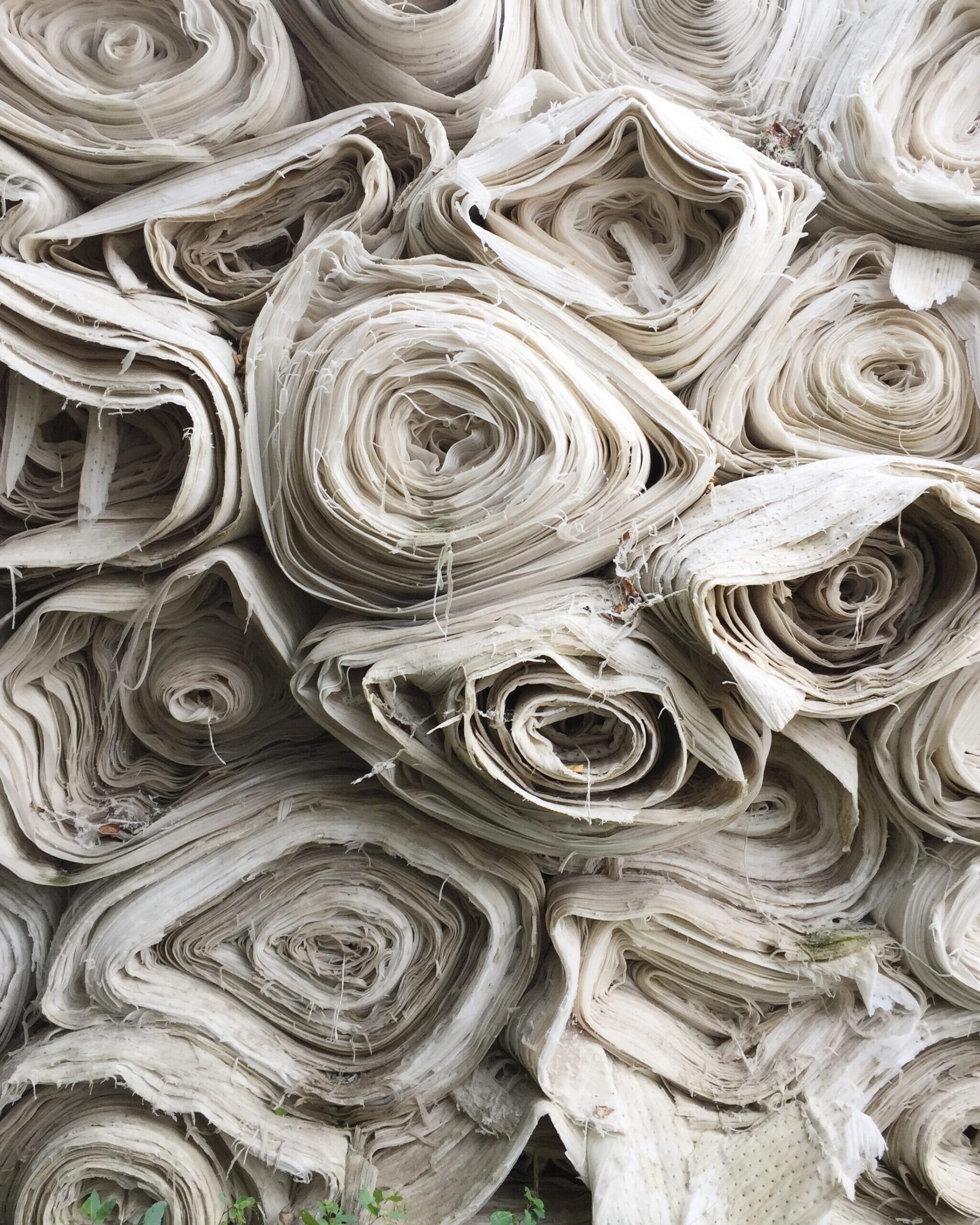
What is textile processing? Understanding the fashion supply chain and its environmental impact

Good Fashion Fund Launches to Invest in Supply Chain Innovation

Fashion Players Team Up to Slash Textiles' Water and Carbon Footprint

How a Kering and adidas-Led Consortium Aims to Dry Out Fashion’s Water Problem
Global accelerator Fashion for Good has announced a new consortium, the D(R)YE Factory of the Future project, backed by Kering and adidas, among others, aimed at reducing water use in textile production. The initiative is directed at accelerating the fashion industry’s shift to dry textile processing—methods that use little to no water, produce no wastewater and reduce overall energy use.
Other Projects
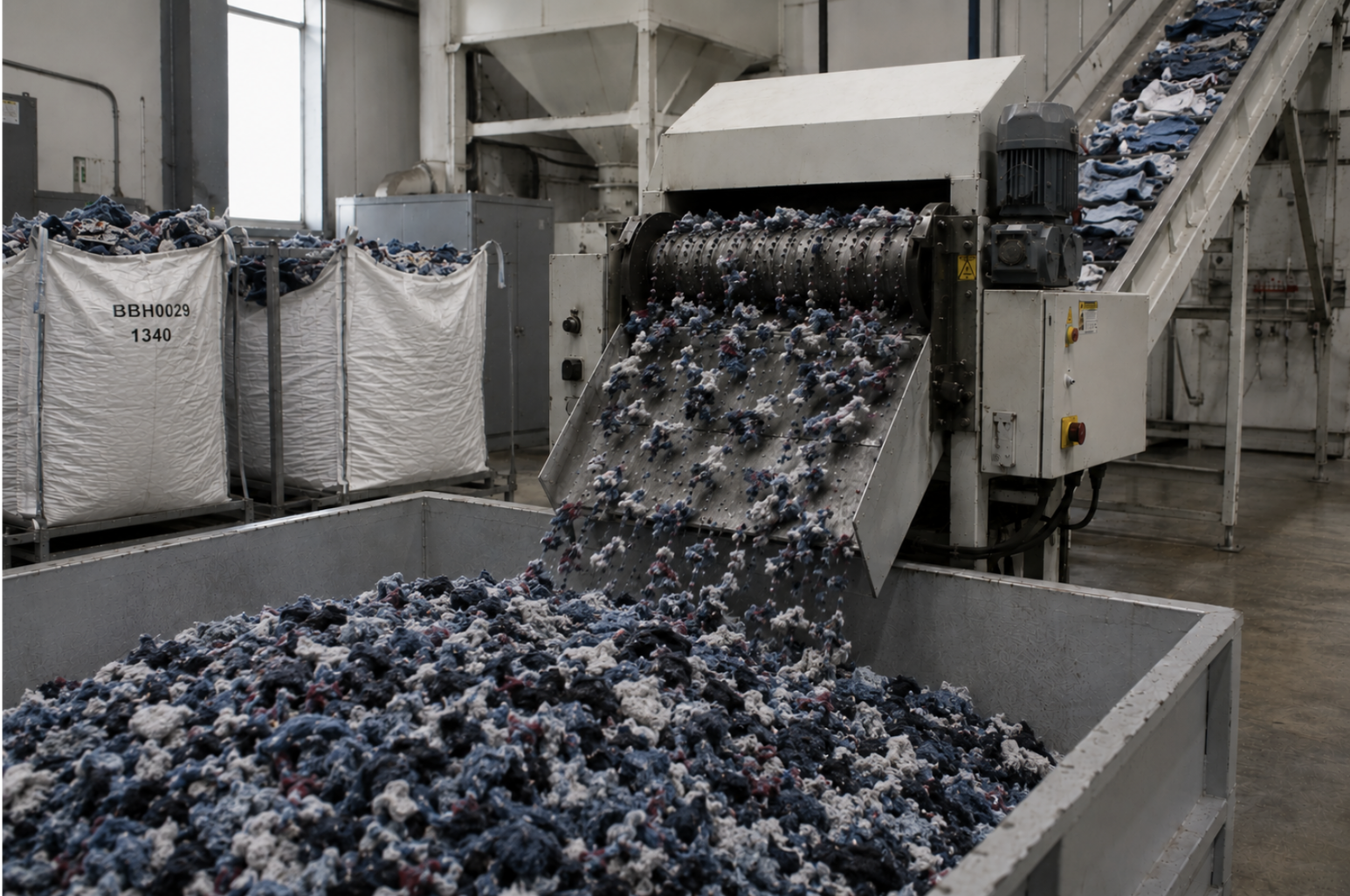
Cotton Reloop Matrix
The Cotton Reloop Matrix Project maps and validates what mechanically recycled cotton fibre and yarn can currently deliver against real-world brand specifications, while collaborating with the supply chain to establish a Standard Operating Procedure (SOP) for handling and processing recycled fibres, building the shared, objective view needed to close that gap.

DW(O)R-X
Durable water- and oil-repellent repellency (DW(O)R) finishes are chemical treatments applied to textiles and footwear to keep materials dry, clean, breathable, and durable. Historically, these finishes have relied on per- and polyfluoroalkyl substances (PFAS). However, PFAS are highly persistent, accumulate in the environment and in human bodies, and are associated with harmful health and ecological effects. Increasing regulatory restrictions, combined with brand sustainability commitments and rising consumer awareness, are accelerating the shift toward PFAS-free alternatives.

Sorting for Circularity Rewear
Fashion for Good expanded its Sorting for Circularity framework to address the challenge of sorting for rewearable textiles to understand better their resale potential and the demand across the second-hand market. We launched an 18-month initiative in January 2024 in collaboration with Circle Economy, brand partners adidas, Inditex, Levi Strauss & Co. and Zalando to enhance the sorting of rewearable textiles using innovative AI technologies. The project seeks to improve garment recovery for resale, promoting circularity in the fashion industry.
