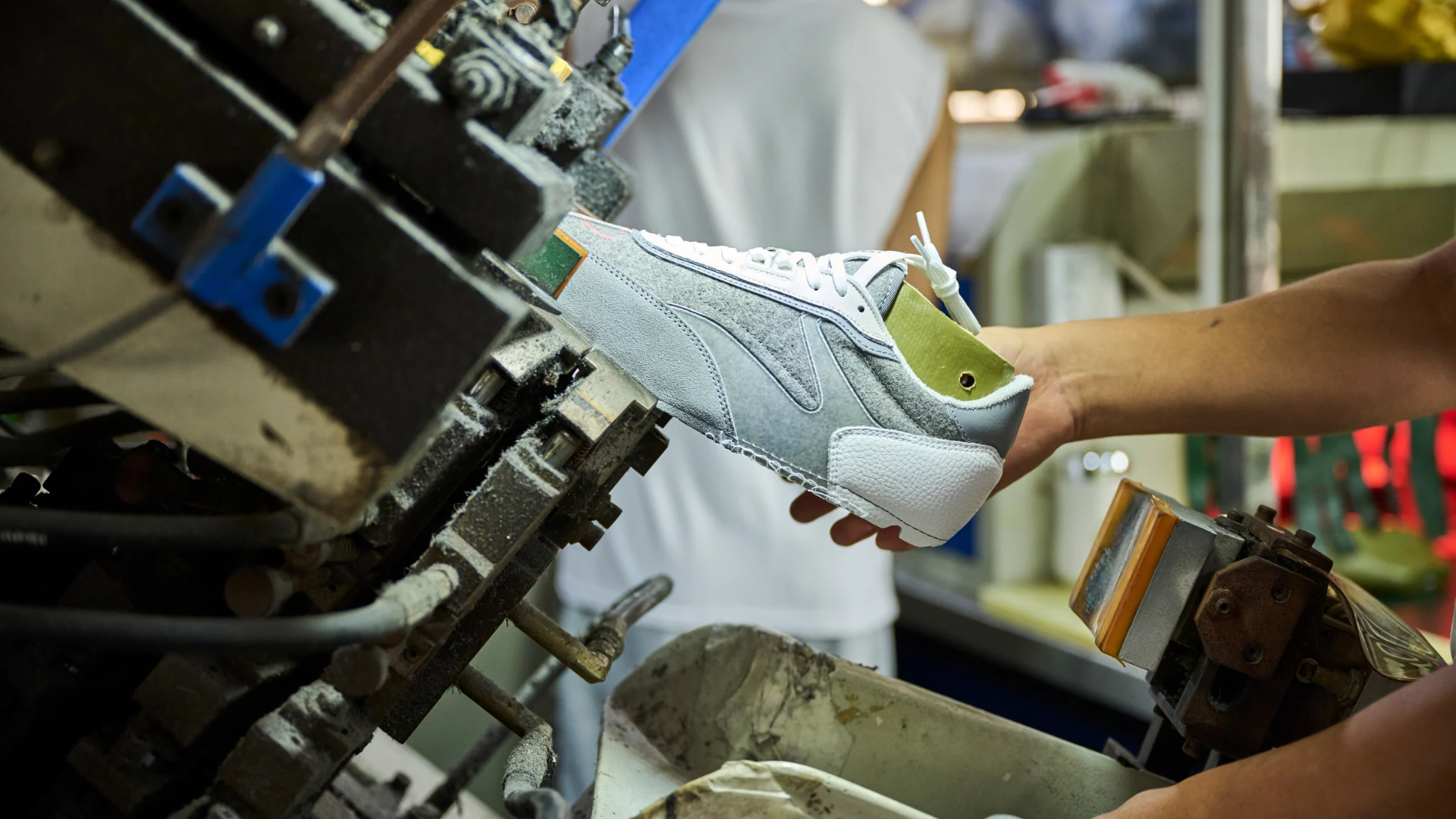
Footprints Unpacked
The footwear industry currently lacks sufficient footwear-specific, process-level supply chain data needed to accurately assess the environmental footprint of its products. Footprints Unpacked engages suppliers to collect primary data and convert it into high-quality, ISO-compliant life cycle inventory datasets. The aim is to provide a shared, non-competitive baseline database that enables credible reporting and scalable decarbonisation across the entire footwear sector.
What's the challenge?
Despite its significant environmental footprint, the footwear industry lacks representative impact data needed to accurately measure and reduce its environmental impacts. While existing LCA databases provide a valuable starting point, brands often rely on generic industry averages, rather than data from specific factories and production processes, making it difficult to identify impactful innovation areas and make evidence-based decisions. This challenge is compounded by growing expectations to substantiate environmental claims with verifiable evidence, while the databases brands rely on remain largely cross-sector rather than footwear-specific. Without primary LCA data, brands risk making decisions about manufacturing and circularity pathways based on assumptions rather than evidence, limiting their ability to direct investment towards solutions with the greatest potential for impact reduction.
Executive Summary
The “Footprints Unpacked: Co-building the Footwear Industry’s Impact Data Infrastructure” project is a collaborative initiative by Fashion for Good and Carbonfact, aiming to close the primary data gap holding back credible environmental reporting and decarbonisation in footwear. The project engages suppliers across Tier 1 through Tier 3 supply chain processes to collect primary energy, materials, water, and waste data.
This data will be converted into standardised, ISO-compliant life cycle inventory (LCI) datasets and distributed across major industry platforms to provide an open-source, non-competitive baseline for the entire footwear sector.
Goals of the Project
-
Close the footwear LCA data gap: collect primary supplier data across Tier 1–3 supply chain processes to resolve the lack of footwear-specific Life Cycle Assessment (LCA) data.
-
Develop standardised LCI datasets: convert primary supplier data into high-quality life cycle inventory (LCI) datasets aligned with international LCA standards (ISO 14040/44).
-
Enable industry-wide access: distribute the datasets across major industry-recognised platforms to provide an open-source, non-competitive baseline for the footwear sector.
Innovation Partners

Project Partners

Innovators

FAQs
Why has it taken this long for the footwear industry to build primary environmental data?
Granular manufacturing data has historically been collected sporadically, since footwear supply chains span many shared factories and production hubs worldwide, making data collection resource-intensive and fragmented.
How is the data quality and reliability ensured?
Primary data is collected directly from suppliers, who receive tailored instructions on the data collection requirements. Reported figures are cross-referenced against supporting documents and benchmarked against existing literature and datasets. Each process also draws on a minimum of three suppliers to triangulate the data and detect outliers.
Why can't the industry keep using existing environmental data?
Much of the available data is based on generalised industry averages rather than the specific factories and processes used to make a given product. This limits the accuracy of product-level environmental assessments and makes it difficult to identify where the greatest impacts occur.
Relevant Resources

The Next Stride: Bio-based Materials for Footwear Soles
“The Next Stride: Bio-based Materials for Footwear Soles” aims to validate the performance and environmental impact of bio-based polymers as sustainable alternatives to the fossil fuel-derived materials currently used in footwear soles. The objective is to collectively de-risk the transition to these “next-generation” materials by rigorously testing their technical properties and assessing environmental benefits. Ultimately, the purpose is to accelerate the adoption of these bio-based solutions and pave the way for a more sustainable footwear industry.

Closing the Footwear Loop
The “Closing the Footwear Loop” project is a major initiative led by Fashion for Good, bringing together leading fashion and footwear brands and their existing circularity programs to tackle the complex challenges of circularity in the footwear industry. The project aims to transform the current linear “take-make-dispose” model into a circular one.

What is Footwear Circularity?

What's Really Inside Your Running Shoe? Unpacking Footwear Material Innovation
Other Projects
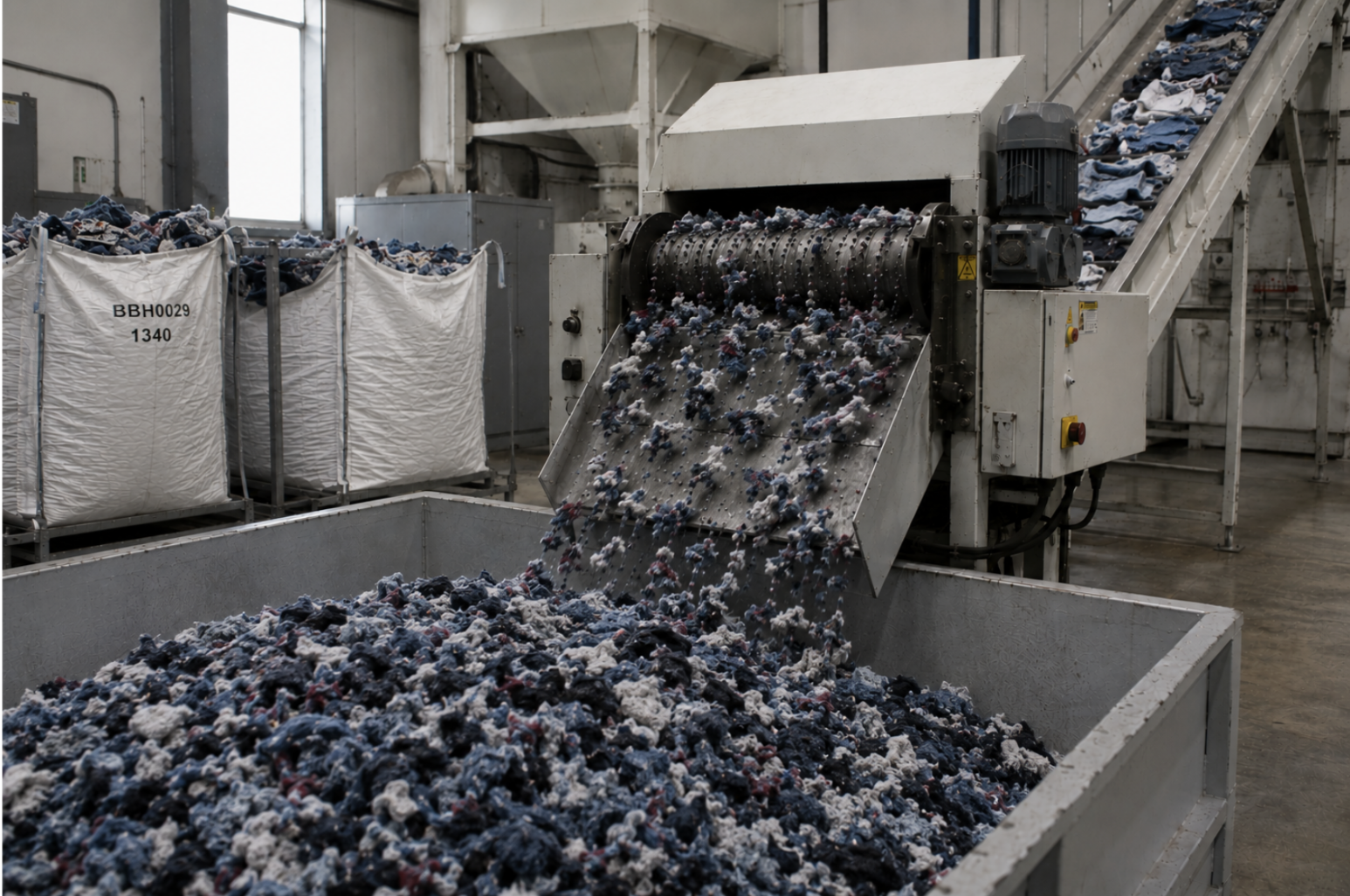
Cotton Reloop Matrix
The Cotton Reloop Matrix Project maps and validates what mechanically recycled cotton fibre and yarn can currently deliver against real-world brand specifications, while collaborating with the supply chain to establish a Standard Operating Procedure (SOP) for handling and processing recycled fibres, building the shared, objective view needed to close that gap.

DW(O)R-X
Durable water- and oil-repellent repellency (DW(O)R) finishes are chemical treatments applied to textiles and footwear to keep materials dry, clean, breathable, and durable. Historically, these finishes have relied on per- and polyfluoroalkyl substances (PFAS). However, PFAS are highly persistent, accumulate in the environment and in human bodies, and are associated with harmful health and ecological effects. Increasing regulatory restrictions, combined with brand sustainability commitments and rising consumer awareness, are accelerating the shift toward PFAS-free alternatives.
Sorting for Circularity Rewear
Fashion for Good expanded its Sorting for Circularity framework to address the challenge of sorting for rewearable textiles to understand better their resale potential and the demand across the second-hand market. We launched an 18-month initiative in January 2024 in collaboration with Circle Economy, brand partners adidas, Inditex, Levi Strauss & Co. and Zalando to enhance the sorting of rewearable textiles using innovative AI technologies. The project seeks to improve garment recovery for resale, promoting circularity in the fashion industry.
