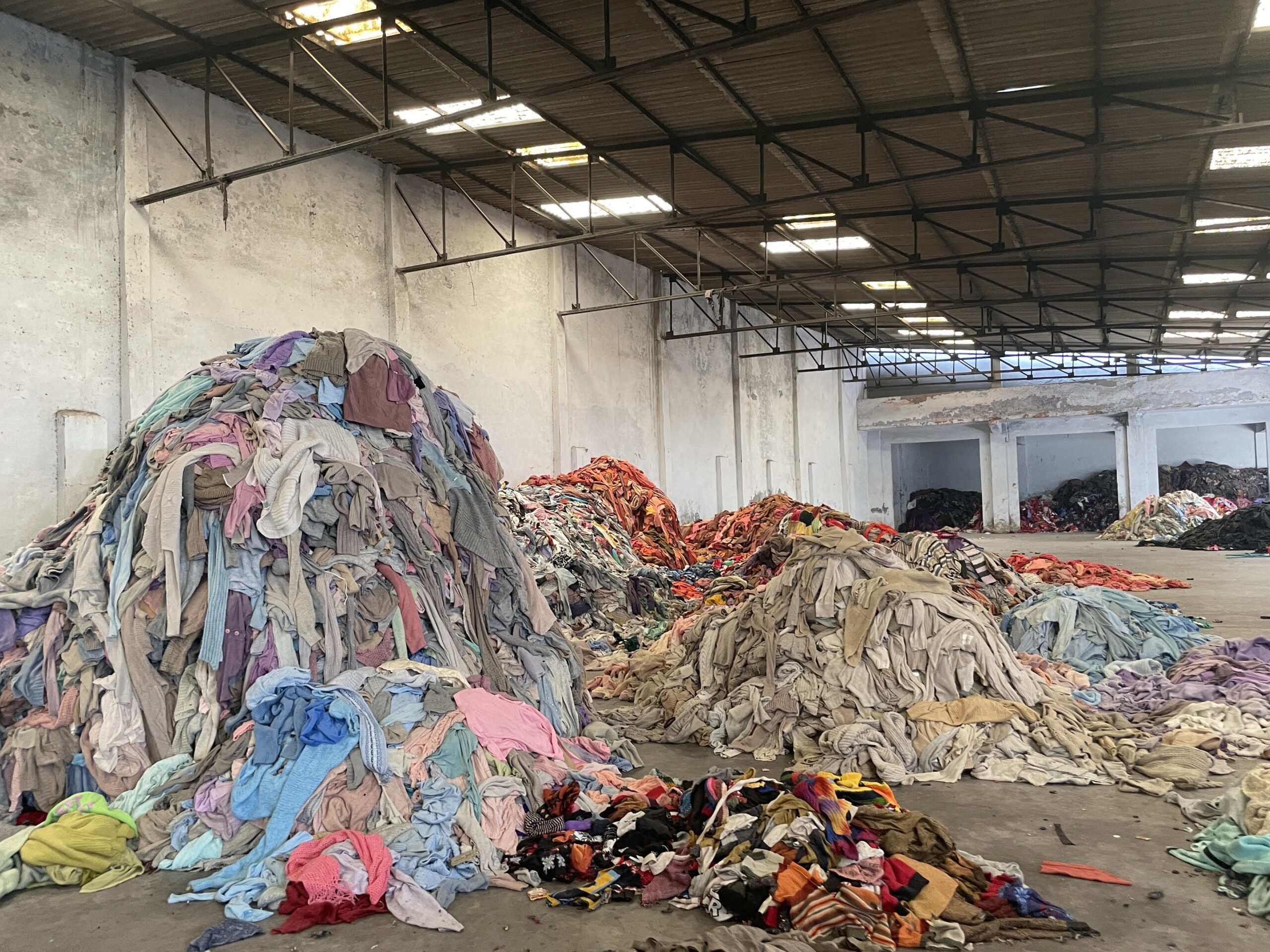
World of Waste
World of Waste is an online tool dedicated to uniting industry-wide efforts to develop and disseminate data on textile waste. The platform consolidates data from individual studies by partnering with ecosystem players.
What's the challenge?
Each year, the textile industry generates significant amounts of waste, presenting both a challenge and an opportunity for circularity. Access to information on such waste is crucial to harnessing its potential. While various organisations have published studies reporting on textile waste, there is no one stop shop that houses all this information.
A consolidated platform enables identification, comparison, and utilisation of textile waste hotspots, which is particularly useful for recyclers looking to secure feedstock and building expansion planning. Additionally, it facilitates the identification of data gaps across regions, waste types, and compositions, prompting further studies.
Executive Summary
An initiative launched by Fashion for Good in November 2024 in collaboration with key industry stakeholders, to facilitate access to global textile waste data via a live, online tool. This platform seeks to consolidate data from studies conducted by Fashion for Good and ecosystem players including Reverse Resources, Global Fashion Agenda, Circle Economy and Accelerating Circularity. It encompasses both post-industrial and post-consumer, to establish integrated access for the public and industry.
The tool provides overview data points as well as links to original studies, providing information on:
- Total waste quantities by country
- Waste quantities by type: post-industrial and post-consumer
- Composition Learnings from the study
- Study structure and methodology
- Organisations involved in the studies, partner organisations
- Upcoming projects in different regions
Goals of the Project
-
Provide visibility of textile waste hotspots for incumbents and innovators in recycling, to facilitate feedstock and expansion strategy planning
-
Consolidate textile waste data across various research projects and organisations participating under the project
-
Regularly update as newer data is made available through various projects
-
Provide visibility on completed and ongoing waste mapping activities, methodologies, type and composition of waste
-
Provide enhanced utility to the ecosystem per identification of needs and opportunities over time
-
Identify the data gaps and to enable bridging these gaps across regions for textile waste
Project Results
-
World of Waste is available for public use as an online resource facilitating identification & utilisation of textile waste hotspots arising through manufacture and use
-
As of November 2024, the tool has mapped an aggregate of 26.6 million tonnes of textile waste spanning 12 countries
-
The tool aims to increase coverage every quarter with the inclusion of more partners & countries
-
-
Stakeholders Involved


Relevant Resources
Fashion for Good Maps Global Waste Hotspots With A New Digital Tool: World Of Waste

Driving Circular Innovation Forward: Fashion for Good Welcomes New Partners to its Sorting for Circularity USA Project
New Partners Join the Sorting for Circularity Project
Sorting For Circularity Europe: Project findings highlight immense opportunity to accelerate textile recycling
Sorting For Circularity; Fashion for Good Launches New Project To Drive Textile Recycling
Sorting for Circularity Europe Expands to Address Rewearable Textile Crisis
Other Projects

DW(O)R-X
Durable water- and oil-repellent repellency (DW(O)R) finishes are chemical treatments applied to textiles and footwear to keep materials dry, clean, breathable, and durable. Historically, these finishes have relied on per- and polyfluoroalkyl substances (PFAS). However, PFAS are highly persistent, accumulate in the environment and in human bodies, and are associated with harmful health and ecological effects. Increasing regulatory restrictions, combined with brand sustainability commitments and rising consumer awareness, are accelerating the shift toward PFAS-free alternatives.
Sorting for Circularity Rewear
Fashion for Good expanded its Sorting for Circularity framework to address the challenge of sorting for rewearable textiles to understand better their resale potential and the demand across the second-hand market. We launched an 18-month initiative in January 2024 in collaboration with Circle Economy, brand partners adidas, Inditex, Levi Strauss & Co. and Zalando to enhance the sorting of rewearable textiles using innovative AI technologies. The project seeks to improve garment recovery for resale, promoting circularity in the fashion industry.

Behind the Break
Behind the Break is a multi-phase research initiative developed by Fashion for Good in collaboration with The Microfibre Consortium. The project takes a research-led approach to advance the fashion industry’s understanding of fibre fragmentation, addressing uncertainties in existing testing protocols and key knowledge gaps. By supporting the development of a more credible and consistent foundation, the initiative aims to enable stakeholders to make informed decisions and take decisive action to mitigate fibre fragment pollution, while leveraging the best available science.
