TOOLS
At Fashion for Good, we develop practical tools to empower the fashion industry with the knowledge and capabilities needed to drive meaningful and scalable impact across the supply chain.
Let's get to work

Price Parity Toolkit
The Price Parity Toolkit (PPT) was designed to help bridge the price gap between next-gen* and conventional materials. This industry-supported framework, with catalytic funding from Laudes Foundation and developed by Fashion for Good with support from Canopy, Finance Earth and select brands and fibre producers, introduces a financing mechanism. This mechanism aims to decouple price premiums early in the supply chain, thereby enabling the adoption and scaling of lower-impact materials.
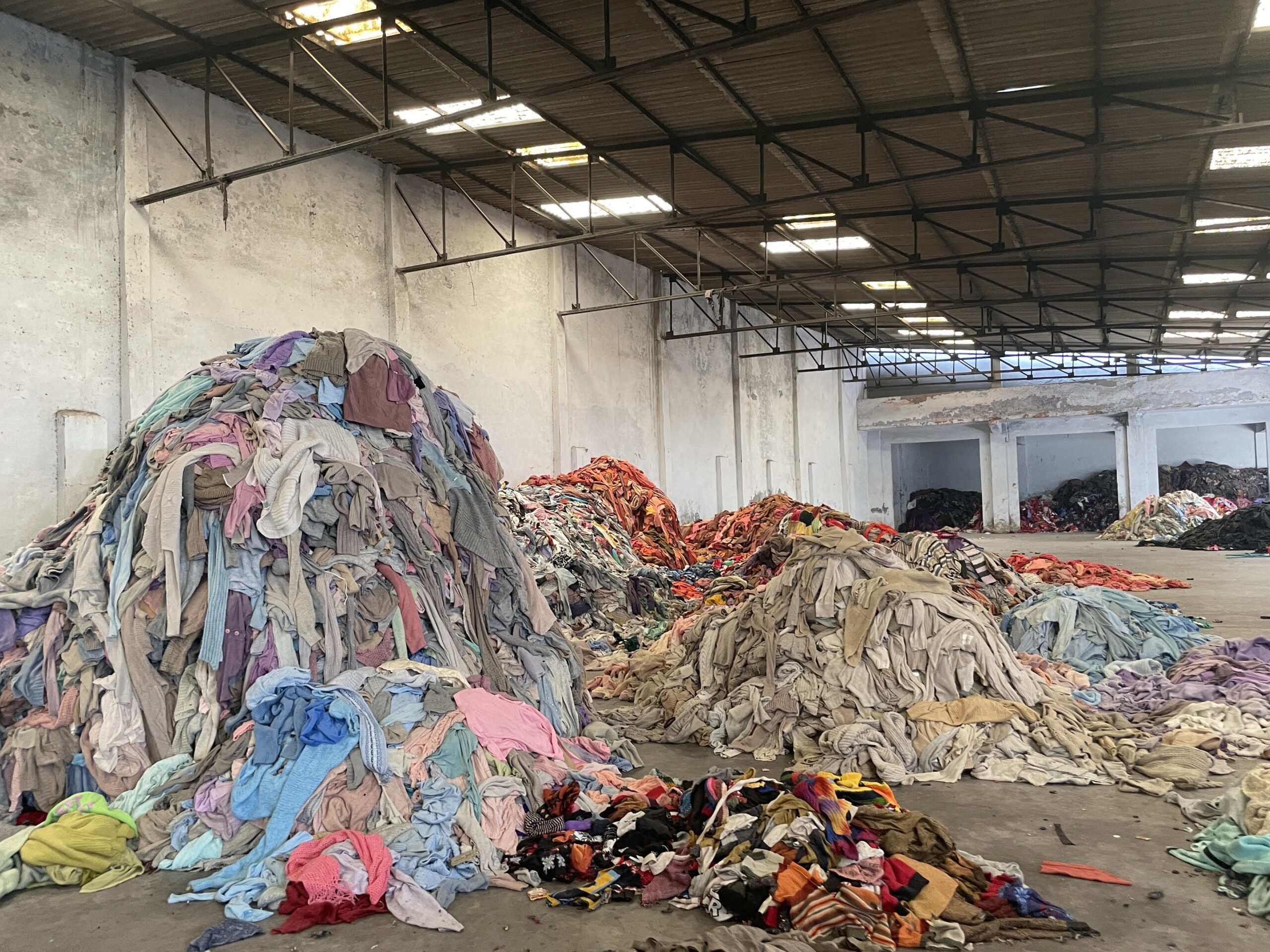
World of Waste
World of Waste is an online tool dedicated to uniting industry-wide efforts to develop and disseminate data on textile waste. The platform consolidates data from individual studies by partnering with ecosystem players.

Future Forward Factories
The “Future Forward Factories” project, initiated by Fashion for Good, focuses on transforming tier 2 processing in the textile industry through innovative low-impact, decarbonisation solutions. It aims to generate actionable blueprints for factories of the future that combine renewable energy and technology upgradation including mostly dry processing innovations. These blueprints take into account the macro geographical factors that are customised for every product to achieve next-zero facilities with a strong return on investment. The blueprint also takes into account the Just Transition lens to ensure that the transitioning from a conventional to Future Forward Factories is inclusive and people-centric.

Advanced Processing Matrix
The Advanced Processing Matrix (APM) aims to continue Fashion for Good’s efforts to accelerate the shift from wet to mostly dry processing in the fashion industry by validating innovative textile processing technologies with potential to drive CO₂e reduction, alongside improvements in water and chemical usage. The tool serves as the knowledge resource for Future Forward Factories aiming to transform facilities into near Net-0.
