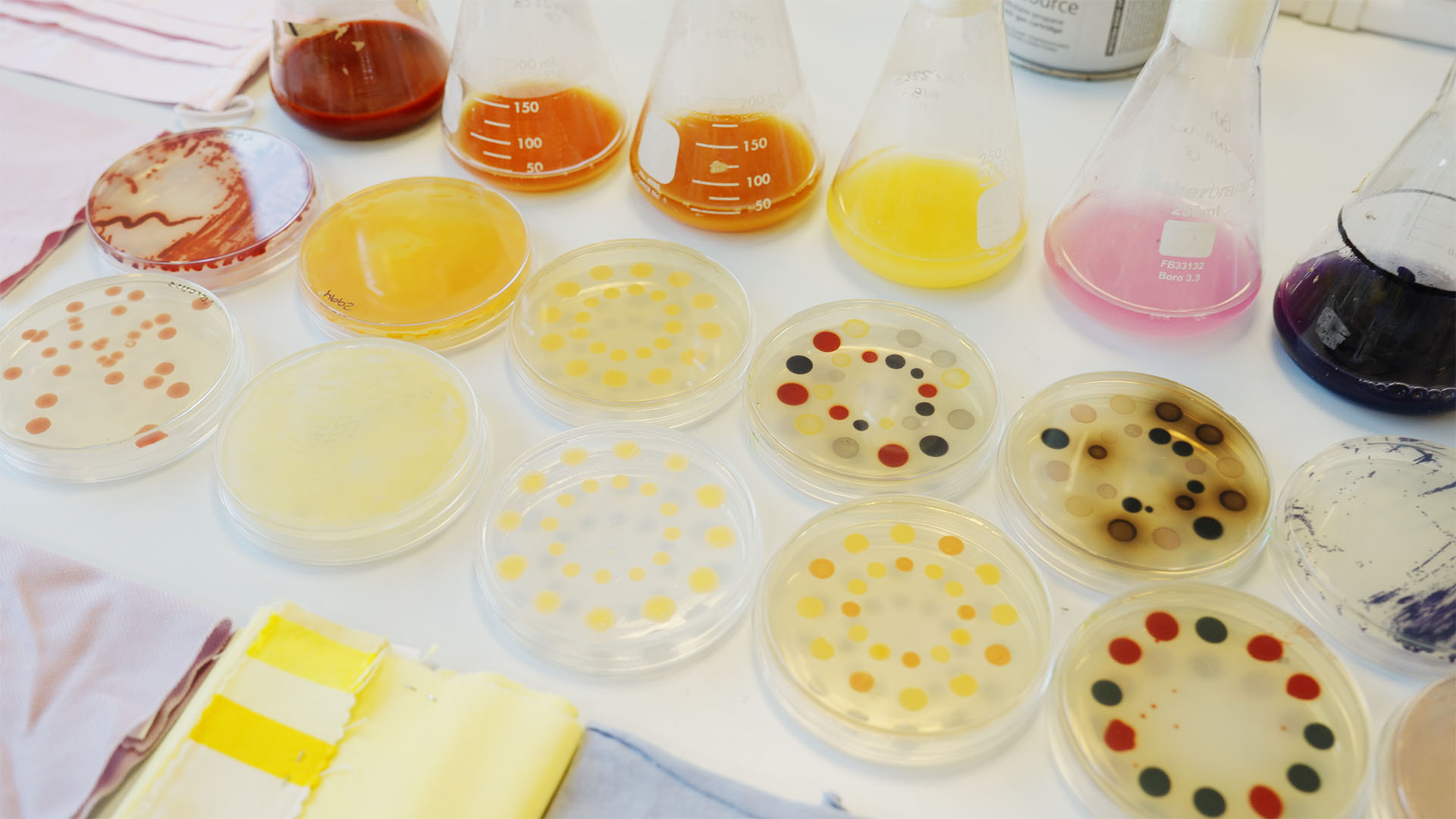
Dyestuff Library
This project was designed to address the gap in knowledge and infrastructure for sustainable dyes by developing a tool to identify, assess, and select innovative dyestuffs based on specific metrics and fabric requirements. The project collaborates with brands, supply chain partners, and industry stakeholders to conduct comprehensive evaluations, aiming to facilitate an industry shift toward sustainable dye options. Structured in multiple rounds, each involving five innovators, the project includes trials at both lab and pilot scales, with support and guidance for participating innovators.
What's the challenge?
Traditionally pretreatment, colouration and finishing are referred to as wet processes as they take place in large tanks or baths filled with water that is constantly kept at a high temperature. Alongside the pretreatment, colouration and finishing steps, a significant amount of water and chemistry is wasted as the fabrics also have to be washed off to remove excess dyes and chemicals. Approximately 10-50% of dyes are washed out in this process, ending up in the effluent water.
Natural dyes and pigments, from sources like algae and plants, have existed for centuries but have historically been overlooked by the fashion industry due to inferior performance, limited colour palette and higher prices than synthetic dyes. However, new disruptive cultivation, extraction and application processes have the potential to overcome these barriers and enable the (re)implementation of natural dyes at scale. Using natural dyes and pigments enables a shift away from synthetic chemistry and in some instances the feedstock used ie: plants, algae or waste means the dyes and pigments have the potential to be carbon negative. However, uncertainty around these alternatives’ scalability, performance, and standardisation has hindered widespread adoption. The industry lacks a reliable framework to evaluate and implement these sustainable dye options, posing a challenge for brands to transition to environmentally friendly practices effectively.
Executive Summary
Fashion for Good launched this project in April 2023 in collaboration with brand partners adidas, Inditex, bonprix & Otto International, BESTSELLER, Target and Patagonia. Alongside manufacturing partners Paradise Textiles, Welspun and Shahi Exports. This project establishes a Sustainable Dyestuff Library to enable the textile industry’s shift toward alternative dyes by providing a reliable tool for evaluating sustainable dye options. Collaborating with leading brands, supply chain partners, and experts, the project rigorously tests innovative dyes through compliance, lab, and pilot trials, with each phase concluding in environmental impact assessments.
Spanning from 2023 to 2025, the project will culminate in a digital library accessible to partners, offering verified performance metrics to support sustainable dye selection. This tool aims to foster broader industry adoption of sustainable dyes, driving transparency and promoting sustainable dyeing practices across the sector.
Goals of the Project
-
Create a sustainable dye library with key performance metrics including feedstock, pigment, application, scalability, TRL, capacity, price, impact and trial results.
-
Through the library create a decision framework tool that will enable partners to choose the best suitable dyestuff for their requirements.
Project Results
Upon completion, the Dyestuff Library digital tool will be accessible to project partners, offering verified performance metrics and assessments of alternative dyestuffs. Key results will include insights from lab and pilot trials, comprehensive data on compliance with toxicity and MRSL standards, and screening LCA findings that pinpoint environmental impact hotspots and suggest areas for improvement.
This project will conclude in Q2 2025 when the high level results will be shared.
Timeline
The project spans two years and started in 2023, structured around three sequential rounds, each involving five innovators. Each round follows this order:
-
Compliance Testing
MRSL and toxicity screening are conducted for the selected innovators to ensure compliance with safety standards.
-
Lab Trials
Innovators who pass compliance testing enter lab trials, progressing through increasing scales of fabric dyeing to assess initial performance.
-
Pilot Trials
Innovators meeting lab trial standards move to pilot trials, where scalability and application on larger fabric samples are evaluated.
Each round concludes before the next begins, with a screening LCA performed by Fashion for Good to evaluate environmental impact.
Innovation Partners





Project Partners

Implementation Partners


Support



Relevant Resources

Fashion for Good Develops a Sustainable Dyestuff Library

In Conversation with Alchemie Technology: Transforming Dry Processing for Textile Dyeing and Finishing

In Conversation with Colorifix: Revolutionising Textile Dyeing with Biotechnology

In Conversation with NTX: Pioneering Digital Dyeing

In Conversation with imogo: Reimagining Spray Dyeing
Other Projects

Behind the Break
In early 2024, Fashion for Good and The Microfibre Consortium joined forces on “Behind the Break: Exploring Fibre Fragmentation”, a collaborative project designed to advance the industry’s understanding of fibre fragmentation. Although fibre fragmentation is an issue that spans multiple industries, this project specifically focuses on the textile and fashion value chain, aligning with the missions of Fashion for Good and its partners to drive systemic change towards a more sustainable industry.

Future Forward Factories
The “Future Forward Factories” project, initiated by Fashion for Good, focuses on transforming tier 2 processing in the textile industry through innovative low-impact, decarbonisation solutions. It aims to generate actionable blueprints for factories of the future that combine renewable energy and technology upgradation including mostly dry processing innovations. These blueprints take into account the macro geographical factors that are customised for every product to achieve next-zero facilities with a strong return on investment. The blueprint also takes into account the Just Transition lens to ensure that the transitioning from a conventional to Future Forward Factories is inclusive and people-centric.
World of Waste
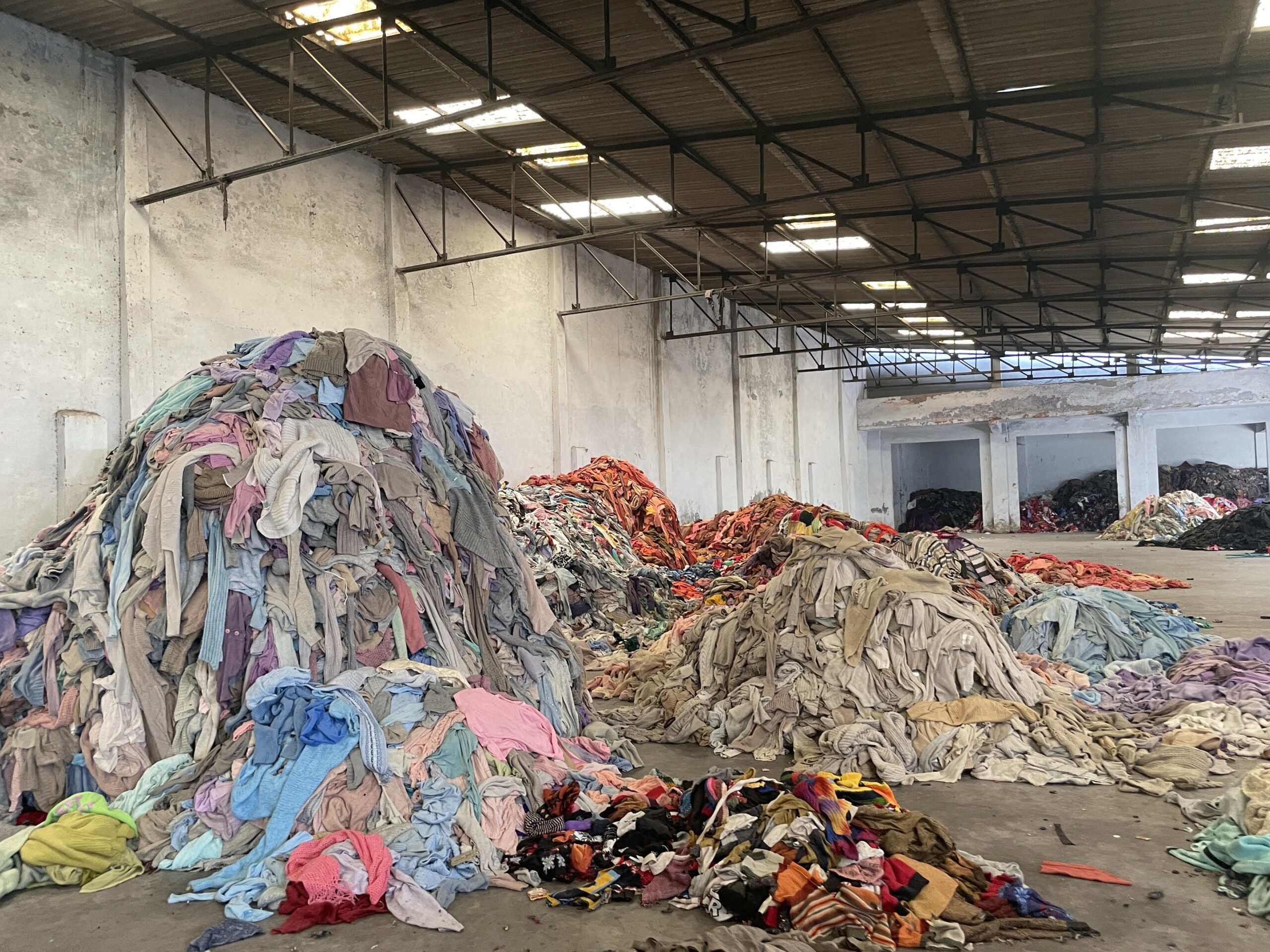
World of Waste is an online tool dedicated to uniting industry-wide efforts to develop and disseminate data on textile waste. The platform consolidates data from individual studies by partnering with ecosystem players.
